

Fort Lauderdale
754-332-2101
Boca Raton
561-832-8288
Contact Our Firm
 The use of the Internet or this form for communication with the firm or any individual member of the firm does not establish an attorney-client relationship. Confidential or time-sensitive information should not be sent through this form.
I have read and understand the Disclaimer and Privacy Policy.



Can Employment Contracts Include Non-Disparagement Agreements?
 Employment contracts generally contain specific terms that affect both the employer and the employee. In many cases, an employer will want to include terms that protect his or her interests and prevent employees or former employees from taking actions that could harm the company. These may include non-compete agreements that prevent a person from engaging in unfair competition and non-disclosure agreements that prevent employees from disclosing confidential information.
In some cases, employers may also ask employees to sign non-disparagement agreements, which are intended to protect a company’s reputation. In fact, an increasing number of Florida employers are including non-disparagement clauses in employment contracts, severance agreements, and settlement documents. The goal for employers is to protect their business reputation or limit what former employees can say on social media. In some cases, these non-disparagement clauses can go too far.
While they are generally legal in Florida, the enforceability of a non-disparagement clause depends on how the document is worded, who it applies to, and whether it violates public policy or federal protections. Understanding the purpose of these agreements and the restrictions they can impose can help employees ensure they are properly protected. An Oakland Park employment law attorney can help you understand whether your employment contract contains a non-compete, non-disparagement, or other type of agreement and how you are bound by those agreements.
What Is a Non-Disparagement Agreement?
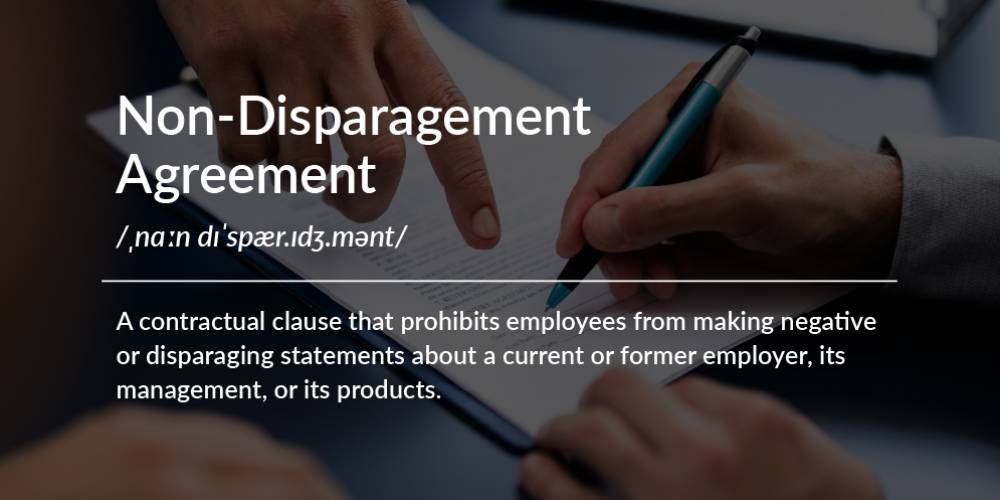
A non-disparagement agreement is a contractual clause that prohibits employees from making negative or disparaging statements about a current or former employer, its management, or its products. Non-disparagement agreements are often included in employment contracts, severance agreements, or settlement agreements.
Disparagement may include any statements by an employee or former employee that could harm the employer's reputation. False statements about a company, as well as factual statements about workplace policies, the actions of co-workers or supervisors, or the quality of a company’s products or services, can violate a non-disparagement clause.
Notably, disparagement differs from defamation, which involves false or misleading statements intended to harm a company. Disparagement includes true statements as well if those statements are detrimental to the company. Non-disparagement restrictions may apply to any form of communication, including:
- Posting information on social media
- Talking to news reporters
- Talking to former employees
- Having private discussions with friends, co-workers, or acquaintances
However, a non-disparagement agreement cannot restrict a person’s ability to file a workers’ compensation claim, and an employee will be allowed to speak to investigators from government agencies who are looking into alleged violations of laws or regulations. As with other types of contractual agreements, a person must be given consideration, or something of value, in return for agreeing to a non-disparagement clause.
If these clauses are included in an employment contract, the consideration provided will consist of the wages and benefits that an employee receives. If a non-disparagement clause is contained in a severance agreement, the severance pay the person receives is usually considered sufficient consideration. In some cases, non-disparagement agreements are mutual, meaning that both the employer and employee will be prohibited from making negative statements about each other.
Since non-disparagement agreements are considered to be "restrictive covenants," Florida law states that they must be necessary to protect a company’s legitimate business interests. They may also be subject to time restrictions, meaning that they typically only apply for a limited period rather than remaining in effect indefinitely.
How Does Florida Law View Non-Disparagement Agreements?
The state of Florida generally enforces non-disparagement clauses if they are clear, mutual, and supported by consideration. Non-disparagement clauses that are overly broad or vague may be unenforceable, considered restraints on free speech, or contrary to public policy. When a non-disparagement clause is in dispute, the courts will balance the employer’s interest in protecting its reputation with the employee’s right to discuss workplace issues or report misconduct.
Federal Limitations and Florida Whistleblower Protections for Non-Disparagement Agreements
The National Labor Relations Board (NLRB) limits the extent to which non-disparagement clauses can be enforced. Under Section 7 of the NLRA, employees have the right to discuss working conditions, pay, or unionization. When a non-disparagement agreement has an overly broad "no negative talk" clause, those rights can be stifled. Federal law requires that employers may not require employees to give up protected speech rights in severance or employment agreements.
The Florida Whistleblower Act (Florida Statute Section 448.102) protects employees who report illegal activity or unsafe practices. Non-disparagement agreements may not be used to suppress lawful whistleblowing or cooperation with investigations. Employers who retaliate or sue based on protected disclosures.
What Are the Penalties for Violating a Non-Disparagement Clause?
If a party is accused of violating a non-disparagement agreement, they may be required to pay damages as detailed in the contract. This could include monetary damages, an injunctive relief order to stop the behavior, and, in some cases, repayment of benefits that the non-disparagement clause was based on.
For example, a former employee who violates an agreement may be required to return the severance pay they received, or they may be ordered to pay damages for the losses their former employer experienced because of the disparagement. The specific penalty will depend on the language of the agreement, proof of harm, and applicable law.
What Should Employees Who Sign a Non-Disparagement Agreement Be Aware Of?
Before signing a non-disparagement clause in Florida, employees should understand exactly what it prohibits and should be cautious of one-sided terms. Employees should verify that the non-disparagement clause includes exceptions for legally protected activities, such as truthful testimony or whistleblowing. Verify that the agreement is mutual, rather than one-sided. Mutual agreements prevent both parties from disparaging each other.
Employees should verify how long the non-disparagement clause will be in place and whether it is a condition for receiving specific benefits. Non-disparagement agreements are most often seen in severance agreements when a company requires an employee to sign the clause in order to receive severance pay or other benefits.
It is always best to consult with an employment attorney to ensure a full understanding of all the implications of the agreement before signing. If the agreement is one-sided, the terms may be negotiated before signing.
Contact Our Broward County, FL Non-Disparagement Agreement Lawyer
Whether you are an employer or employee who needs to address non-disparagement agreements or other restrictive covenants, The Elliot Legal Group, P.A. can help you understand your rights and options. To learn how we can help you draft and negotiate workable agreements or address contract violations, contact our Oakland Park, FL employment contract attorney at 754-332-2101 to schedule your initial attorney meeting. Attorney Elliot also practices international business law and is a licensed solicitor in both England and Wales.